Some thoughts only arrive when the body is busy with something simple.
By Costante Mancini ·
Most of us try to think the way we work: seated, focused, against a deadline. We stare at a problem as if attention alone could open it. Often it does not. The question stays exactly where we left it.
Walking changes the conditions. The body takes over a rhythm it already knows, and the mind is no longer asked to perform. It is simply allowed to wander alongside.
A rhythm that asks nothing
There is a reason so many writers and philosophers walked. Not to collect kilometres, but because a steady pace occupies just enough of us. The feet decide the next step; the rest of the mind is left free to drift, return, and drift again.
On a trail, a thought can be half-formed for an hour without anyone asking for a conclusion. That patience is rare. In most rooms, an idea must be defended the moment it appears.
On a walk, nothing needs to be decided before it is ready.
Distance, literally
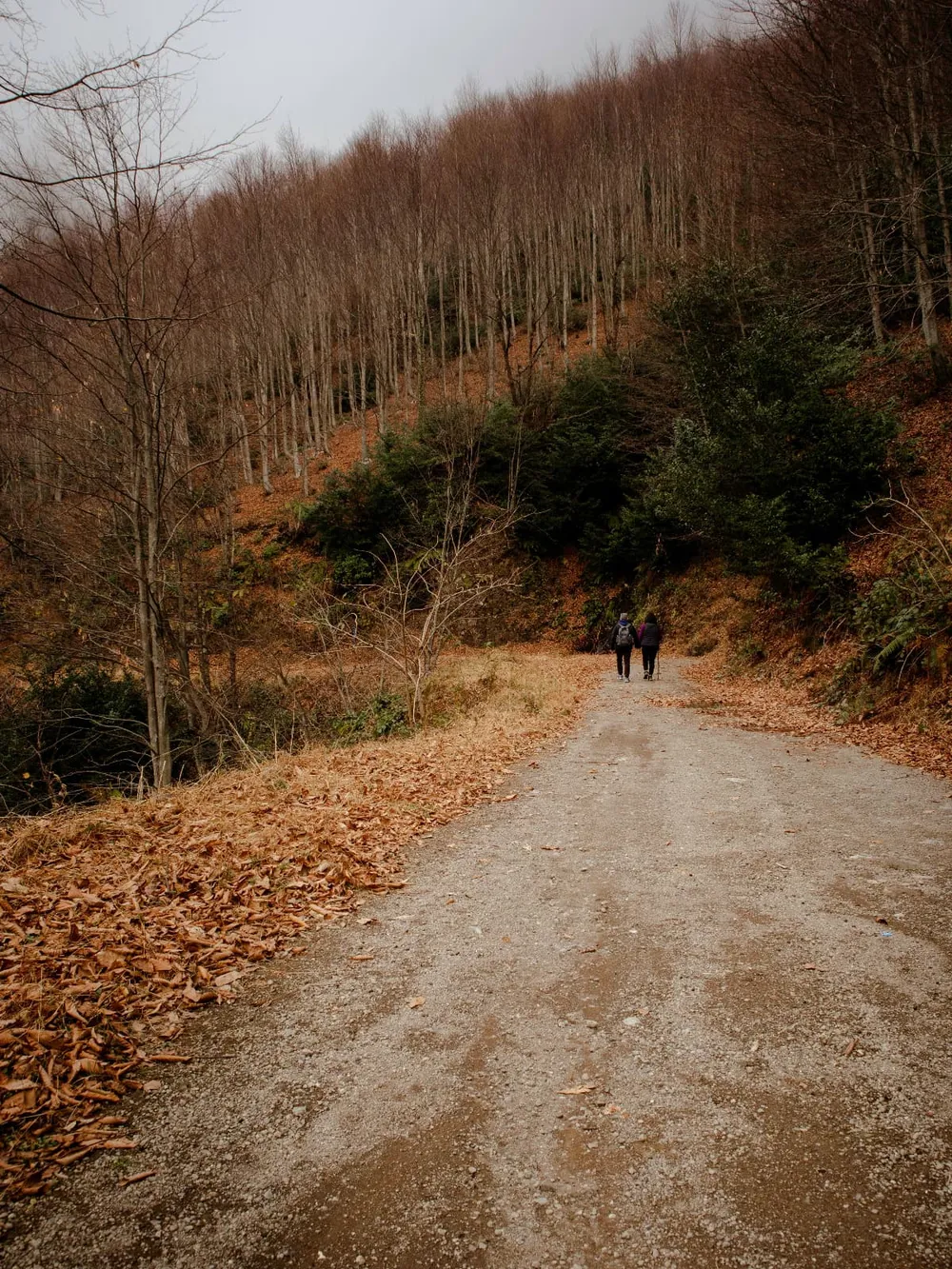
We speak of needing distance from a problem. A walk offers it in the most literal way. After three hours among beech and chestnut trees, the meeting, the message, the decision are still there, but they are smaller, set in a larger landscape. Proportion returns.
This is not a technique, and it does not promise answers. Some days the walk brings clarity; some days it only brings tiredness and a quieter evening. Both are honest outcomes.
Why Montseny
The old paths of Montseny are made for this kind of walking: long enough to let the noise settle, quiet enough that nothing competes for your attention. It is the reason The Walk lasts six hours and has no agenda.
If there is a principle here, it is the one at the centre of our philosophy: you do not need to force a thought. You need to give it room, and then keep walking.